

- By Admin
- July 10, 2026
- Web Design
Custom Dev vs CMS: When to Scale Your Business Web Strategy
For most startups and small-scale companies, going live on the CMS platform such as WordPress and Shopify is the only natural choice. Such platforms provide an easy-to-use drag-and-drop approach, huge library of plugins, and relatively low start-up cost. But every expanding company sooner or later faces the tipping point where you realize that your business goals can no longer be achieved within the limitations of a template site. If your workflow is constrained by the need for constant data entry or you are forced to provide a poor user experience due to non-conformable generic layouts, then it is the right time to think about switching to full-stack development.
The Performance Bottlenecks of Off-the-Shelf Platforms
The most prominent weakness of any conventional CMS lies in the “bloat” of its architecture. The reason behind such an architecture is the attempt to make the system everything for everyone and thus having to pack in thousands of lines of unnecessary code along with various legacy functions and bulky plugins that your business will never utilize. This will inevitably result in increased loading time, which will harm your position in the search results and annoy your future clients. In the Internet world where even a split second plays a huge role in conversions, the custom full stack development can help you get rid of the unnecessary bloat completely.
Bridging the Gap Between Design and Functionality
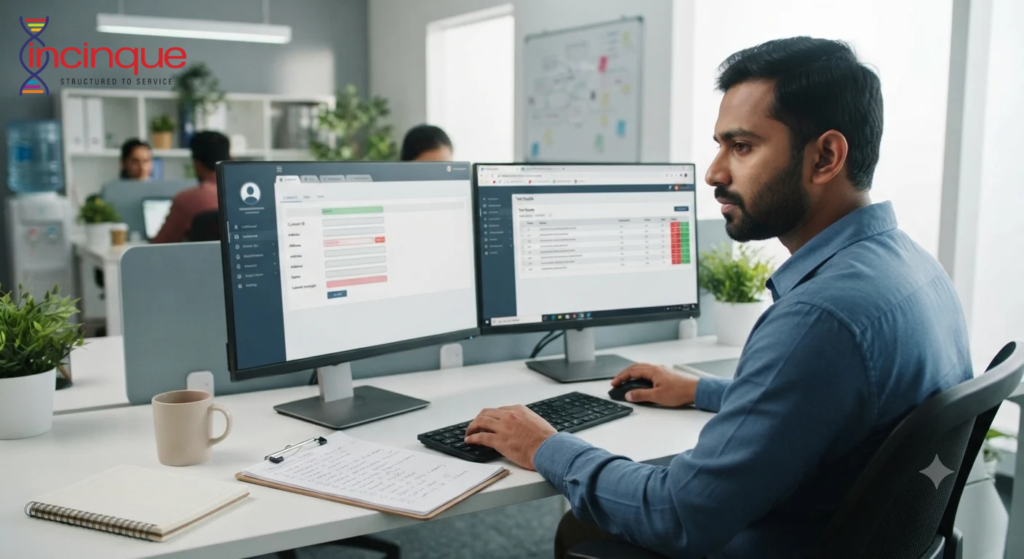
The problem for many companies is that they try to fit their unique business logic into tight boxes offered by a pre-designed theme. By going with a custom build, you gain full control over your IT ecosystem. Custom building allows you to seamlessly integrate your system with all the existing legacy solutions, highly sophisticated CRMs, and enterprise applications that no plug-in can deal with. Moreover, it gives you an opportunity to provide your own team with a custom built admin panel, which will suit your business processes, not vice versa. Such an approach makes the fundamental difference between a “live” website and a real automation tool for your company.
Strategic Scalability and Enhanced Security
The investment decision to develop a custom application needs to be made based on the company’s roadmap of expansion. Another major consideration when developing an application is the element of security since well-known content management systems are regularly attacked by automated bots due to their known vulnerabilities. With a custom-built application, you get the advantage of incorporating security mechanisms that are completely unique to your environment, making it difficult for any malicious parties to exploit your network. In cases where you have complex role-based authorization, multilingual management and other advanced features like artificial intelligence-based interface that can only be provided through custom development, you need not consider anything else.
Building for the Future, Not Just Today
As you begin planning for the next stage of expansion in your company, reflect on whether or not your existing IT infrastructure is a platform or a constraint. A CMS is a platform that works until it stops working by becoming a constraint; custom development is the platform that grows along with you. In opting for a customized architecture, you’re not simply buying a website, but acquiring a unique asset that adds real value to your company brand.
Executing Your Digital Evolution
The decision to create custom software is the clear way of investing in your brand’s edge over competitors. With custom software, your digital footprint will be as unique as your business, fast, secure, and effective. Once you realize that you have outgrown pre-made templates and need a powerful system tailored for scalability, you can contact us at Incinque Agency and our professional architects, strategists, and full-stack developers will help you to create a digital platform suited for your business needs.